The Shells of Central Venezuela: A Reconstructed Narrative.
The premise. What follows is my attempt to reconstruct the history of these shells. Their origins, I propose, lie in the 3rd century AD, in the wetlands of central Venezuela. This is my own reading of the evidence, shaped by conversations with my late teacher, Prof. Warwick Bray, an eminent specialist.

Neptune and Amphitrite by Jan Gossaert in 1516, Berlin.
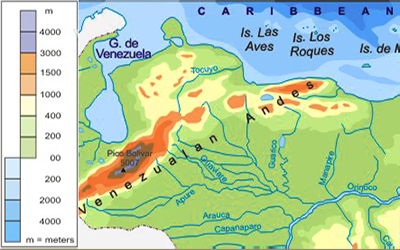
The rite of passage. I imagine a young man leaving his marshland community, where wildlife flourished among the lush waters, on an initiation journey into adulthood. His path would lead to mountains roughly 700 km away, a perilous trek that might have taken a year. Along the way he could meet other tribes and exchange knowledge, and he would return with anthracite as proof of his achievement.
The two hands. The carving on the inside of the shell differs from the intricate work on the outside, which suggests to me that different hands made them. I infer that each young man carved his own inner cavity after returning from the expedition, while the choice of partner fell to the bride, who carved the outer shell. In this reading, the shell embodies a union.
A European echo. Centuries later, I suggest, Christopher Columbus brought male shells back to Europe after his 1502 exploration of the eastern coast of Central America. I see one depicted in a 1516 painting by Jan Gossaert, and I find the shared posture of Neptune and Amphitrite striking.
Source and purpose. My documented source is Hermano Basilio R.S.C., Cerámica de Camay, estado Lara, distrito Torres, Venezuela (La Salle-Los Dos Caminos, Caracas, 1959), pp. 302-317. From this history I have crafted shells of my own, for your shared enjoyment and to stir your partner’s desire.
Guanajuato, 260-100 BC.

The Shells of Central Venezuela: A Reconstructed Narrative.
The premise. What follows is my attempt to reconstruct the history of these shells. Their origins, I propose, lie in the 3rd century AD, in the wetlands of central Venezuela. This is my own reading of the evidence, shaped by conversations with my late teacher, Prof. Warwick Bray, an eminent specialist.
Neptune and Amphitrite by Jan Gossaert in 1516, Berlin.
The rite of passage. I imagine a young man leaving his marshland community, where wildlife flourished among the lush waters, on an initiation journey into adulthood. His path would lead to mountains roughly 700 km away, a perilous trek that might have taken a year. Along the way he could meet other tribes and exchange knowledge, and he would return with anthracite as proof of his achievement.
The two hands. The carving on the inside of the shell differs from the intricate work on the outside, which suggests to me that different hands made them. I infer that each young man carved his own inner cavity after returning from the expedition, while the choice of partner fell to the bride, who carved the outer shell. In this reading, the shell embodies a union.
A European echo. Centuries later, I suggest, Christopher Columbus brought male shells back to Europe after his 1502 exploration of the eastern coast of Central America. I see one depicted in a 1516 painting by Jan Gossaert, and I find the shared posture of Neptune and Amphitrite striking.
Source and purpose. My documented source is Hermano Basilio R.S.C., Cerámica de Camay, estado Lara, distrito Torres, Venezuela (La Salle-Los Dos Caminos, Caracas, 1959), pp. 302-317. From this history I have crafted shells of my own, for your shared enjoyment and to stir your partner’s desire.
Guanajuato, 260-100 BC.